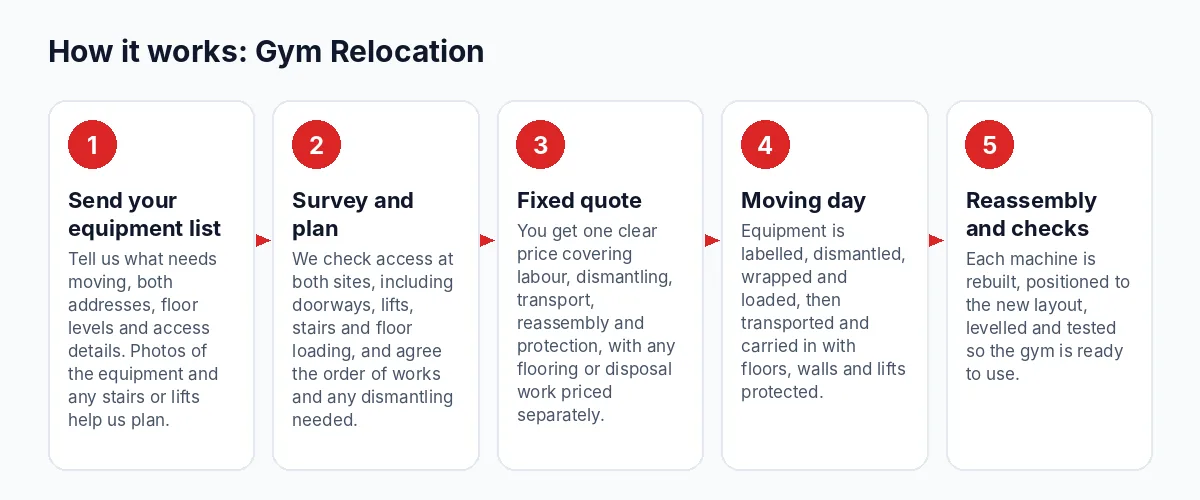
Large gym machines are built to be assembled on site, so most can be partly or fully dismantled for a move. Common reasons are a door or lift that is too small, stairs with tight turns, or a machine too heavy to carry in one piece. The work needs care: weight stacks, cables, pulleys, guide rods and treadmill decks have to go back exactly as they were to be safe.
Good practice is to photograph each machine before it is taken apart, label every part and fixing, and keep each machine's bolts bagged together. On reassembly, frames are squared and levelled, bolts tightened, cables routed and tensioned, selector pins checked and treadmill belts aligned. Each machine is then function tested through its full range before it is handed back, and any worn or damaged parts found along the way are reported.
What is included
- Photographs and labelling before dismantling
- Removal of shrouds, consoles and upholstery
- Safe removal of weight stacks, plates and counterweights
- Dismantling of frames to the minimum needed for access
- Bagging and labelling of fixings by machine
- Rebuilding, squaring and levelling frames
- Cable routing and tensioning, and belt alignment on treadmills
- Function test through the full range of movement
Who it is for
- Machines that will not fit through doors, lifts or stairwells
- Second-hand equipment bought from another gym or a private seller
- Equipment being moved into storage and rebuilt later
- Rooms being refurbished or refloored around existing kit
- New owners who need equipment rebuilt after a separate delivery
How much does it cost?
As a guide, dismantling and rebuilding a multi-gym, Smith machine or rack in the UK typically costs around £150 to £400 per item, with complex cable machines and large rigs at the higher end. See our full cost guide.