Gym Relocation

Commercial gym relocation

Commercial gym relocation in the UK: surveyed, phased moves of cardio, strength kit, free weights and flooring with minimal downtime. Typical prices.

In short: Commercial gym relocation is the planned move of a whole gym or leisure facility, including cardio machines, selectorised and plate-loaded strength kit, racks, free weights and flooring, to a new site or a new layout. It suits gym operators, leisure centres, hotels and workplaces. A mid-size UK commercial gym move typically costs £5,000 to £15,000 depending on equipment, access and distance.

Get a free quote

Fixed price, no obligation. We aim to reply the same day.

By sending this form you agree to be contacted about your enquiry. See our privacy policy.

Commercial gym relocation

A commercial gym move is closer to a small construction project than a removal. Equipment lists can run to hundreds of items and tens of tonnes once plates and dumbbells are counted, and each machine has its own weight, dimensions and dismantling needs. The new site has to be ready first, with flooring laid, power and data installed and the layout agreed, so equipment can go straight into position.

Downtime is the biggest cost for most operators, so moves are usually phased or run overnight and over weekends. Cardio often goes first because it is the most used, followed by strength machines, racks and rigs, then free weights and accessories. Every item is logged and labelled so it reaches the right spot and can be rebuilt, levelled and tested before members return.

What is included

  • Survey of both sites, including access routes, lifts, loading bays and parking
  • Equipment inventory with locations in the old and new layouts
  • Labelling, dismantling and wrapping of cardio and strength equipment
  • Floor, wall, door and lift protection at both sites
  • Transport with handling kit such as skates, pallet trucks and stair climbers
  • Reassembly, levelling, cable tensioning and function testing
  • Free weights, plates, dumbbell racks and accessories moved and set out
  • Coordination with flooring, electrical and equipment service contractors

Who it is for

  • Independent gyms moving to larger or better-located premises
  • Leisure centres and health clubs during refurbishment
  • Hotel, university and corporate gyms being relocated or refitted
  • Operators reconfiguring the gym floor within the same building
  • Chains consolidating or opening sites with transferred equipment

How much does it cost?

As a guide, a mid-size UK commercial gym relocation usually costs £5,000 to £15,000, with large leisure facilities, long distances, upper floors and out-of-hours phasing pushing costs higher. See our full cost guide.
How it works

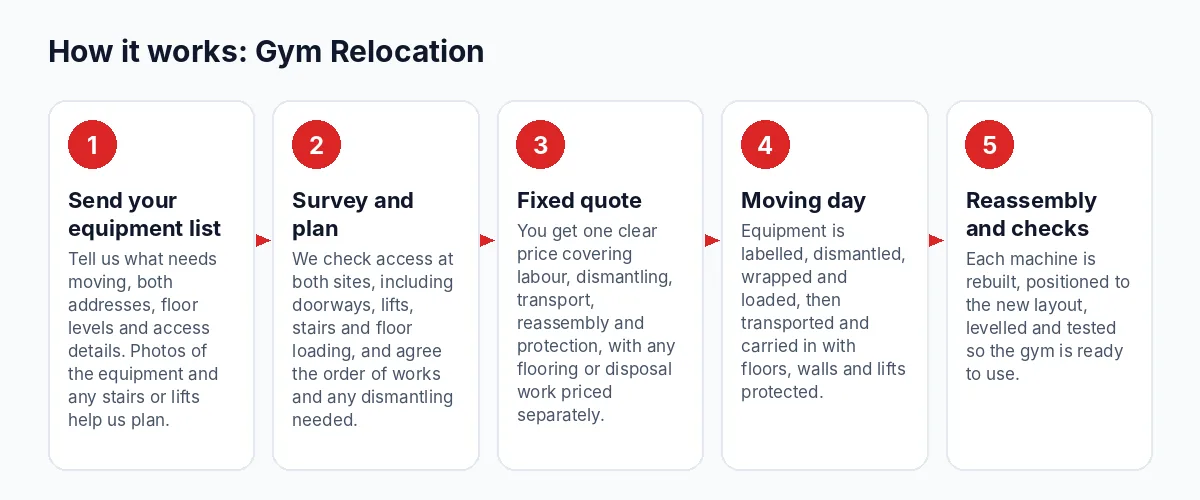
How commercial gym relocation works, step by step
  1. Survey and inventory

    Both sites are surveyed and every item is listed with weight, size and new position on the floor plan.

  2. Prepare the new site

    Flooring, power, mirrors and any platform areas are completed before equipment arrives.

  3. Phased move

    Equipment moves in agreed phases, often cardio, then strength, then free weights, out of hours where needed.

  4. Rebuild and handover

    Each machine is rebuilt, positioned, levelled and tested, and a final walk-round is done with the operator.

Commercial gym relocation: FAQs

How long does a commercial gym move take?

A smaller commercial gym can often be moved over a weekend, while a large facility may take one to two weeks in phases. The real timeline depends on the number of machines, how much dismantling is needed, access at both sites and whether the new site is fully ready. Delays most often come from unfinished flooring or electrics at the new premises.

Can the gym stay open during the move?

Often partly, yes. A common approach is to keep the old site running while the first phase is installed and tested at the new site, then move the rest in a short closure. Within the same building, sections can be moved zone by zone. Members should be told the dates and any changes to opening hours well in advance.

Should the equipment be serviced after the move?

It is good practice. Moving can loosen fixings, alter belt alignment on treadmills and affect cable tension on strength machines. A function check on the day catches obvious issues, and booking the routine service or inspection for soon after the move makes sure each machine is safe and recorded as checked at its new location.

Who should check the floor at the new site?

For upper floors, mezzanines or heavy free-weight areas, a structural engineer should confirm the floor can take the loads from racks, plates and machines. The building owner or landlord will usually need to agree any assessment or strengthening. Ground-floor slabs are rarely a problem, but drop zones still need the right impact flooring.

Get a quote for commercial gym relocation

Send a few details and get one clear, fixed price, usually the same day.

Get a quote

Last updated 6 November 2026